

February in Manitoba brings plenty of opportunities to overcome the winter blues. There’s a day dedicated to love and a festival dedicated to honouring our unique francophone heritage.
The entire month of February, though, celebrates literacy, and the roots of I Love to Read Month are distinctly Manitoban.
It all began in February 1980 with the establishment of I Love to Read Day by Dr. Bev Zakaluk, president of the Reading Council of Greater Winnipeg. A few years later, Manitoba’s lieutenant-governor, the Honourable Pearl McGonigal, hosted a group of Grade Three students in the Manitoba Legislature’s Blue Room. They were presented with a book bound in red velvet containing stories that the students had written and submitted.
By 1990, it became a month-long celebration in response to the International Reading Association’s call to foster a love of reading. Over the decades, schools across the province have developed their own strategies to encourage literacy through celebration.
This year, students of the Niverville Elementary School sat in on readings by local luminaries such as Corny Rempel and members of the Nighthawks hockey team.
“We have a reading challenge bingo board and Guess the Book Cover contest,” says NES principal Tracy Beaudin. “We have also connected with Smitty’s for their I Love to Read initiative and one of our local [indigenous] elders is coming to read to our student about Metis legends.”
The month will also bring classroom readings, library readings, and outdoor readings in the park, all to establish a love for the written word.
At the Niverville Middle School, students are being encouraged to go for Olympic-style gold in their reading challenges.
Competing as classrooms, students earn points based on time spent reading, with bonus points available for classroom reading discussions and book reviews. The winning class will receive complimentary tickets to a Nighthawks game, sponsored by Your Grocery People.
Continuing with the Olympic theme, students are encouraged to try out for Team Reading by getting involved in activities like Olympic poetry writing and Olympic readalouds.
In an age where distractions like the internet and electronic gaming abound, NMS vice principal Susanne Kwiatkowski says that books play as important a role as ever.
Local educators work collectively year-round to make literacy a high priority by connecting reading to kids’ natural interest. Whether it’s sports, games, culture, or identity appreciation, there are books relevant to every topic.
“Reading is the foundation of learning in our school,” Kwiatkowski says. “Print books help students build focus, comprehension, vocabulary, and imagination. There is real value in holding a book, turning pages, and spending uninterrupted time with a story or informational text. That experience helps students develop reading stamina and a deeper connection to what they are reading. For that reason, we continue to invest in high-quality, engaging books for our classrooms and library.”
Even so, she says, the school recognizes the role technology can play in supporting reading through digital texts and audiobooks. In the end, what matters most is that students are reading, no matter the format.
Books remain the heart of the NMS library. Still, the idea of the library as a physical space is evolving. Libraries are increasingly transitioning into common rooms that provide a broad range of opportunities for collaboration and creativity.
“The space is designed to be welcoming and dynamic,” Kwiatkowski says. “It’s a hub where students can read quietly, collaborate on projects, explore new interests, and connect with peers.”
Legacy of Literacy
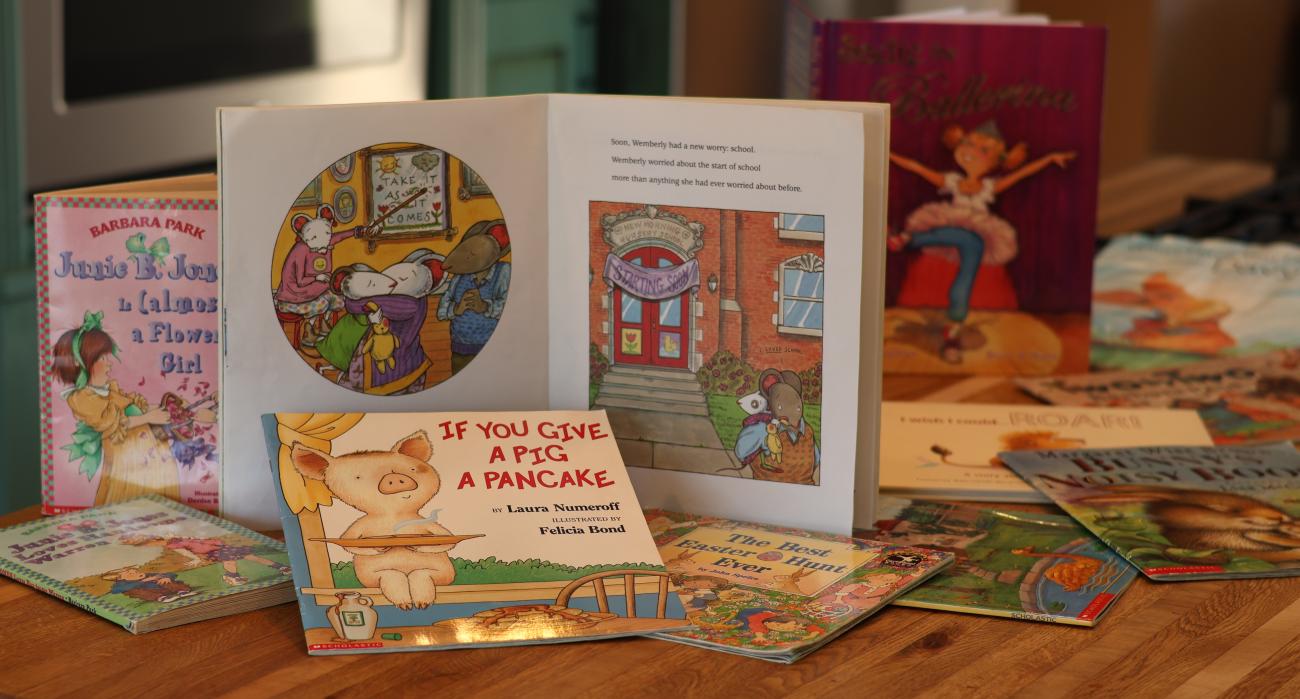
For generations of Manitobans, the name Scholastic is synonymous with a love of reading. Scholastic is a globally recognized publisher and distributor of children’s books with operations in 13 countries and exports to virtually every corner of the globe.
For decades, Scholastic Canada has helped tens of thousands of children develop a love for the written word through monthly catalogues, book clubs, and annual book fairs.
Scholastic Canada first launched in 1957. Today their programs run in 88 percent of the more than 10,000 public elementary schools across the country, resulting in three million books being shipped to young readers each year.
Beginning as a magazine publisher for young readers, Scholastic was founded in Pennsylvania in 1920.
In 1948, the company promoted the idea of student book clubs and the Scholastic book fair became an institution in 1981. Typically, Canadian elementary schools recognize the program in the month of March.
For schools hosting Scholastic book fairs, the event is an excellent way to raise much-needed funding and new library books thanks to the company’s rewards program.
According to Scholastic, a cool $20,000 million in books, supplies, and cash was earned by Canadian schools last year.
Regardless of age, if you’re from Manitoba, you may remember the thrill you felt when you were ushered into the school gymnasium or library to witness tables upon tables of books, posters, and trinkets for sale during a Scholastic book fair.
For many students, the book fair provided opportunities for personal shopping, but it also gave them a say in which new books would be acquired for the local library.
“I loved it because it gave me the chance to explore new books, genres, and authors,” says local resident Myléne Gagné-Colliou. “Not that I was able to buy anything. I still loved looking at it.”
“We didn’t go to Winnipeg shopping, and it was my only chance to look at new books,” adds Amanda Kipe, a Niverville mom. “So much goodness for this reader.”
It’s not just about books. Laura Chevrefils says that she looked forward to the Scholastic book fair in order to collect more Lisa Frank gear, a collection of whimsical stickers and school supplies made popular in the 1980s.
“I remember [buying] bookmarks and picking up reading on my own at home just so I could use the bookmark,” Chevrefils says. “It’s so fun to watch my Kindergartener come home now, proud as a pumpkin with the book he chose and read it for the next few days straight.”
Mary Hughes agrees that Scholastic had a way of enticing kids to read.
“At first it was all the cool stationary and knickknacks you could get with the $20 your parents gave you to spend,” says Hughes. “Then came all the access to niche books that weren’t available at your school library. It made accessing reading materials so much easier as a kid and young adult. I even ordered through Scholastic [books] at my high school.”