

April 11, 2026 marked exactly 150 years since the community of Ste. Agathe was granted official status by Monsignor Alexandre Taché in 1876.
To mark the auspicious occasion, the Ste. Agathe CDI is inviting everyone to an old-fashioned community party on May 28. From 6:00–8:30 p.m., attendees will be treated to a complimentary barbecue, cake, and a variety of fun giveaways.
The RM of Ritchot’s Homegrown Harmonies will provide stage entertainment, with live performances by Mike Nukem and Marcos Martin, Deception Drive and the Prairie Joggers as well as lawn games for everyone.
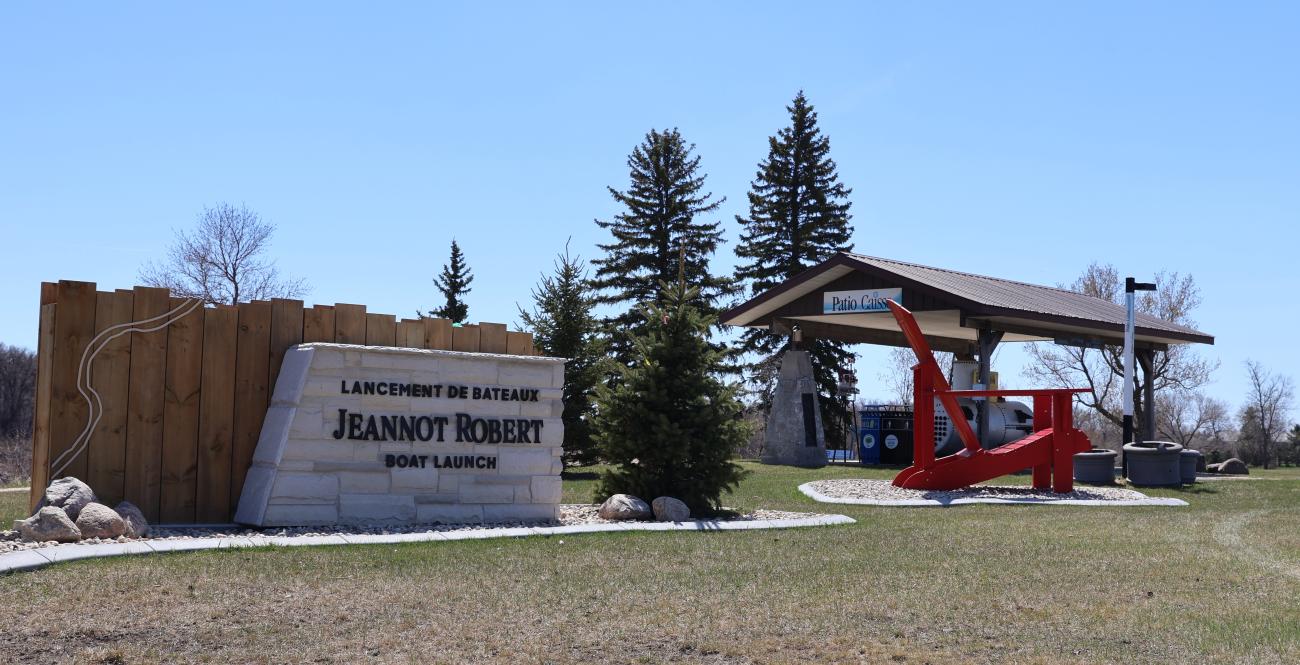
All this will take place at Parc Promenade sur la Rouge, the historic point where the first settlers came ashore.
This small riverside community was settled by two groups of Métis in 1863. It became known as Pointe à Grouette, named after one of those families, Antoine and Madeleine Grouette. The couple and their three sons settled on land where Ste. Agathe’s school is located today.
By 1868, Pointe à Grouette had a population of 205. Some made their living hunting buffalo and fishing, others through agriculture and commerce. Three years later, a ferry and wharf were installed and a church and school introduced.
Historically, though, this period was difficult for the Métis in Manitoba. As a result, many of the Pointe à Grouette settlers weren’t granted title to their land and ended up leaving for areas north and west.
In no time, the region was resettled by French-Canadians from Quebec. In 1876, with the renaming of the village, the Sainte-Agathe parish was erected and priest Father Cyrille Samoisette appointed.
The large Grouette house, once home to the founding family, was repurposed as a schoolhouse. Soon a consistent shipment of immigrants, supplies, and mail arrived by barge and steamboat. Residents travelled to Winnipeg via the nearby rail system.
At the turn of the century, the opening of a convent and boarding school ensured continued modernization.
Telephone lines came in 1908. In 1910, Dr. Bonin took up residence, helping to curb the spread of contagious diseases that resulted from spring flooding.
The Louis Riel Bridge, connecting Ste. Agathe to areas east of the river, was erected in 1960.
Not to be outdone by other significant milestones, the flood of 1997 may be one of the most significant. This small francophone community was one of the hardest hit along the Red River. Many homes and businesses were lost to that event.
For Guy Gagnon, Ste. Agathe has always been home. He’s dedicated much of his life to teaching the French language and studying the history of the French-Canadian and Métis peoples.
“The Métis people, just like the First Nations communities, need to be more appreciated in regards to their culture and their way of life,” Gagnon says.
As a child, Gagnon remembers the Métis being referred to as the Mitchif, which was also the name of their mixed language of Cree and French. The Mitchif name unfortunately held derogatory connotations, even among some of the Métis themselves.
“A lot of them Anglicized their names because they were not proud of the way they spoke,” Gagnon says. “They were not proud of the people they represented. My mom would never have admitted to the fact that she had Métis blood.”
Since those days, the general ethos has changed. Ste. Agathe has evolved to include a much broader mix of cultures while still maintaining a deep connection to its roots.
Today, the town’s most treasured features remain: the unobstructed views and tranquil mise-en-scène. Change is slow and methodical. Families return to raise their children here because they remember their own unhurried childhoods.
“If my mom and dad would return today, they would still recognize our community,” says Gagnon. “It has grown, but the basic culture, the basic development of the community, is still the same.”