

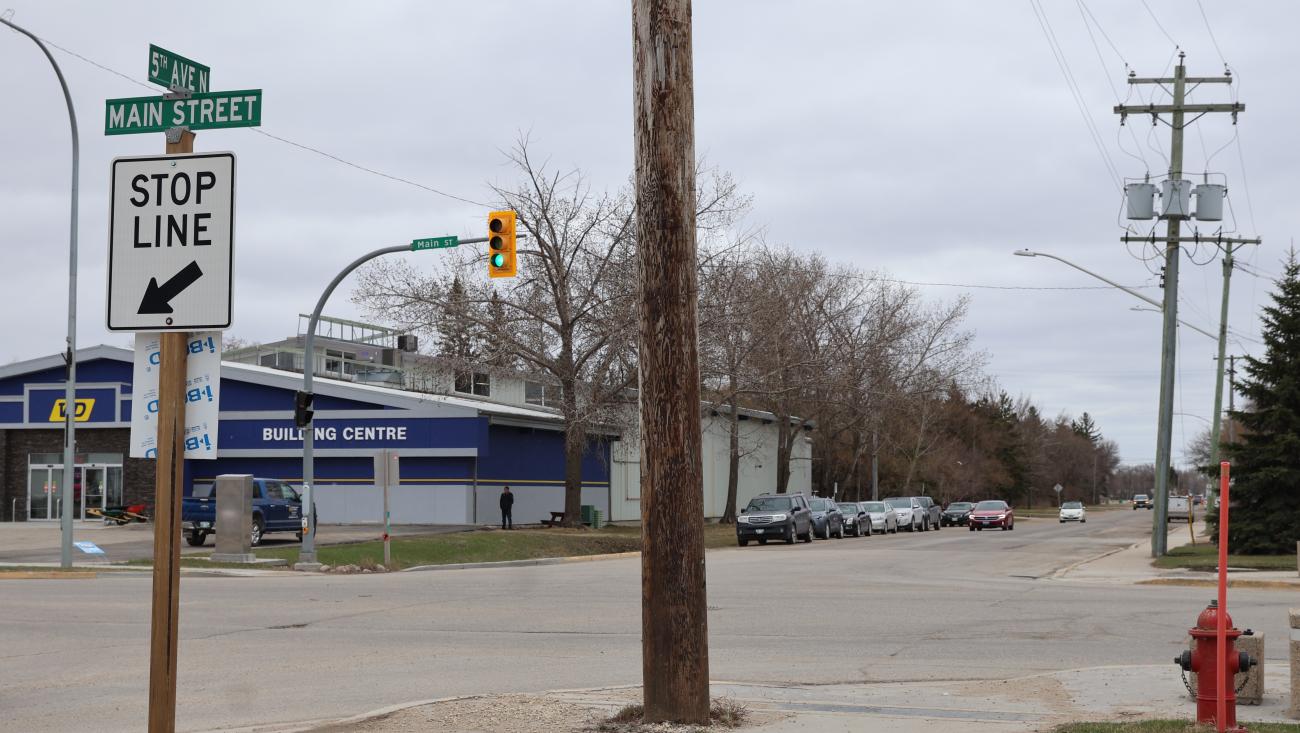
This past April, the Town of Niverville received welcome news: local infrastructure will be boosted to the tune of nearly $10 million in provincial funding. Those funds cover approximately half the cost to complete a major overhaul of Highway 311 west of the tracks and a resurfacing of the balance of Niverville’s Main Street east of the tracks. The town will bear the balance of the project’s cost.
The good news didn’t end there. Once the street renewal project is complete, the province will place jurisdiction of both Main Street and Fifth Avenue South into the hands of the community.
Why is this important? For the first time since its incorporation in 1969, Niverville will have authority over all road maintenance and traffic, as well as the freedom to make improvements and upgrades to virtually every street within its boundaries.
There are minor exceptions to this rule, including stretches of Main Street where it meets up with Wallace Road on the west end of town and Sixth Avenue on the east. For now, the province will retain a 100-meter stretch at each intersection so that future improvements at these corners will come at the province’s cost.
The importance of this announcement won’t be lost on those either living or commuting along Fifth Avenue South. The street, from Main Street to Crown Valley Road, hasn’t seen any significant roadwork in decades apart from a short stretch at the south end. There is a four-block stretch that more closely resembles a cratered moonscape than a residential thoroughfare. Every spring, and in times of heavy rainfall, water pools into freshwater lakes in the southbound lane, at times reducing traffic to one lane.
Brent Byggdin has owned a home along this stretch for the past 25 years. He says that the constant potholes and water problems are met with a chronically slow response.
“I am hopeful and somewhat confident that the town will maintain better stewardship of Fifth Avenue South than was the case under provincial stewardship,” says Byggdin.
He adds that limiting semitruck access would also go a long way towards maintaining the integrity of the street going forward.
“It’s been given to us, so we can now do what we need to do to make Fifth Avenue a better road without provincial oversight,” says Eric King, the town’s CAO.
There are no guarantees, King points out, as to how soon the town will invest in the street’s renewal. But at this stage, council will begin budgeting for it.
“The first step will be rebuilding the catch basins that don’t drain, and possibly some curbing and stuff,” King adds. “The goal, at the end of the day, is that it will be resurfaced up to [Hespeler Park Drive].”
It is hoped, King says, that the mill-and-fill technique will be an option. This involves grinding away the top layer of asphalt to create a rough surface and then adding a new upper layer. Its use on Fifth Avenue will depend on the thickness of the asphalt the province laid down in the first place.
“I’ll be intrigued to find out how much [asphalt] is actually there,” King says. “The highway, for example, can have eight inches of asphalt in some spots and two inches in other spots.”
If the asphalt is too thin along Fifth Avenue, the technique won’t work.
In the meantime, drivers, cyclists, and pedestrians will already be sufficiently inconvenienced by the upcoming summer’s Main Street renewal. Patience will be especially required at the west side of town, where work will get underway to expand the road to four lanes, add a traffic circle, and close one intersection.