

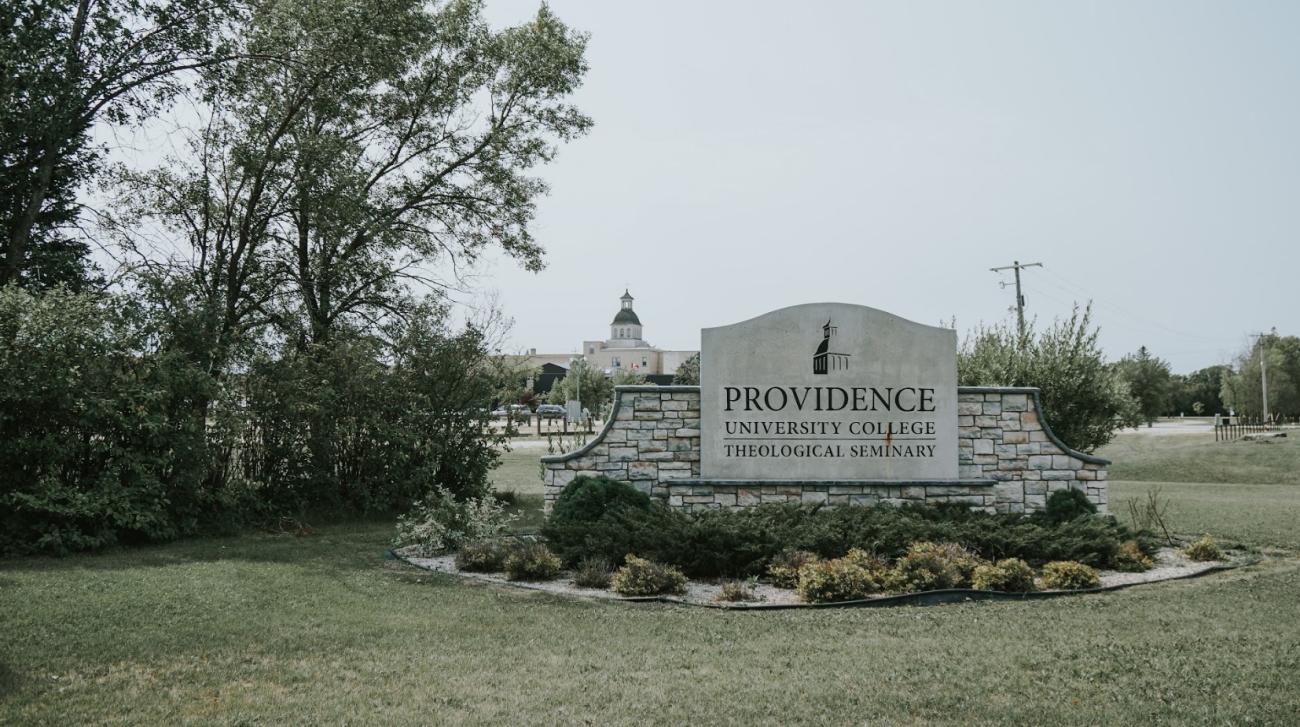
It would be an understatement to say the past two years have been challenging for Providence University College. Recent decisions at both the federal and provincial level have trickled down, requiring the faith-based school to make major budget cuts.
The current environment has pushed the school to rethink its educational strategy.
In early 2024, when the federal government announced its plan to put a cap on the number of international students seeking to study in Canada, Providence’s international student enrolment potential was cut by more than 50 percent. In turn, their total revenues were also cut in half.
For schools like the Manitoba Institute of Trades and Technologies (MITT), it meant the end of a 40-year run in Winnipeg.
In the short term, Providence will let go ten percent of its workforce. At the same time, non-salary expenditures are being cut by $1 million.
In courses where enrolment has declined, programs will be dropped, while retaining focus on those areas where student demand is still strong.
“Nobody wanted this,” says Providence president Dr. Kenton Anderson. “It was not in the plan that we would let go of people that we love. But given the impact of these government choices, we really had no choice.”
New revenue streams are being explored and implemented as quickly as possible.
To start, Providence will soon add to their athletic offerings in order to attract a greater number of Canadian students. Soon women’s rugby, cross-country running, and curling will enhance the already robust lineup which already includes volleyball, basketball, soccer, and futsal.
Other educational institutions across the country are cutting athletic offerings, Anderson says, largely due to the fact that they offer their athletes scholarships. Providence has never put a great emphasis on scholarships, which at this stage could be an advantage.
But with a historical emphasis heavy on international outreach, the institution is moving forward with an initiative called Providence Global, which will launch on a small scale this coming fall.
Under this new program, Providence will bring education to foreigners who cannot currently come to them.
“This fits to our long-standing sense of mission,” Anderson says. “[Our early founders] talked about a vision for the world, which is quite consistent with our vision as a Christian institution.”
In the beginning, Anderson says that course selection will be limited to business- and management-related degrees. They’ll start in a country where relationships are already strong: the Philippines.
Launching a global initiative is no easy feat. It requires collaborations with trade commissioners, education governances, and recruiting agencies. The curriculum, too, needs to be completely rebuilt to fit the new mould.
“It’s a different model of learning. We’re doing this in order to create a niche for ourselves. If we were just going to go over there and do conventional education, the market is pretty crowded. So far we’re quite encouraged in what we’re seeing in terms of interest.”
In recent weeks, Anderson announced his upcoming retirement from Providence. With that retirement set for May 2027, he’ll have one more year to help Providence implement these new strategies before passing the baton.
“God has been faithful to preserve this work through a lot of tight moments. This one feels particularly immense, but we have a path forward and we’re following that path. We’ll see where it takes us.”