

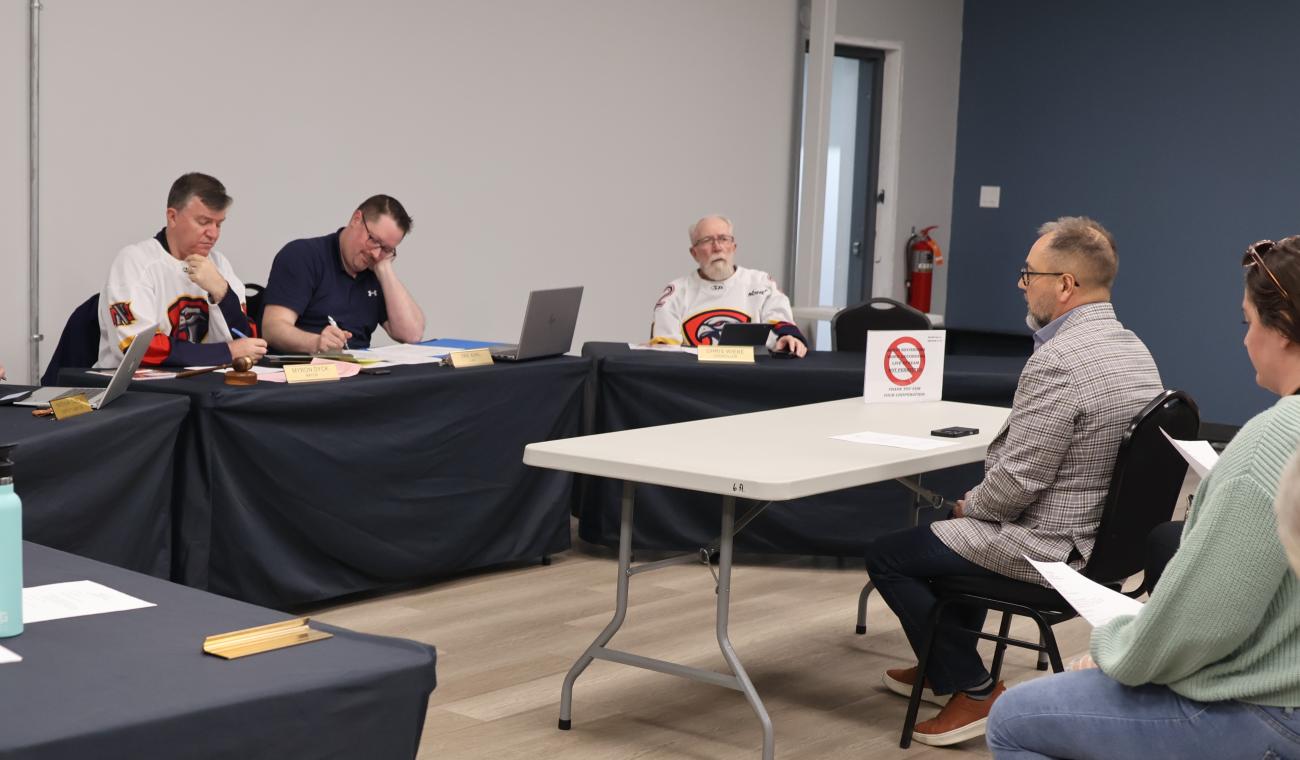
Local residents filled the gallery of Niverville council’s ad hoc meeting room at the Centennial Arena on April 21. They came seeking answers and to demonstrate cautious support for a group home initiative being proposed to council that night.
The property in question is a single-family dwelling located at 225 Third Street North.
Presenting on behalf of the proposed group home was Jeff Daly, CEO of Simaril, a nonprofit dedicated to offering personalized support services for individuals with physical, intellectual, and mental health disabilities.
It was at the province’s recommendation, he said, that the idea for an adult group home in Niverville arose. Simaril’s funding model relies fully on provincial support.
“We came and had a look around and then purchased this house with the purpose of converting it to a home for people with wheelchairs,” Daly told council. “There would be three people living there and we would have 24-hour staff [onsite].”
Simaril will hire locally to provide yard and home maintenance year-round. Three residents have already been selected by the province for the home. Two currently live in the Niverville area with parents who are no longer able to provide adequate support. One group home resident would be moving from Winnipeg.
“One of the goals that we have when we establish homes is to make it a lifetime home for people,” Daly said. “We generally don’t have a lot of people moving in and out.”
Mostly, he says, the tenants will be middle-aged or older.
A mother from a nearby Third Street residence asked how loosely and broadly the term “disability” is used in the case of this group home. She indicated that the street had many children of all ages.
The people qualifying for a Simaril small group home, Daly said, can have varying levels of physical and intellectual ability. Some are able to go to jobs. Others are completely incapacitated by their condition. All are monitored around the clock by a care worker assigned specifically to them.
“Our only concern was whether this would be a space for people struggling with addiction issues,” a second resident said. “And if they are approved for this, would they have flexibility in the future to shift the scope of care they provide to people with addiction issues?”
There’s a big difference between general disability care and addiction care, this resident said, especially when it comes to how each would affect the quality of a residential neighbourhood filled with young families.
To that, Daly replied that Simaril does, in fact, provide housing services for people struggling with addiction issues. These are called cluster homes. However, they exist only in larger centres where treatment is close at hand. He assured residents that this model would never be undertaken in a community the size of Niverville.
Further to that, cluster homes are unlicensed facilities with six or more bedrooms, whereas a three-bedroom single family, as is the house on Third Street North, requires annual inspections and licensing by the province.
Council, too, provided assurances that, should Simaril attempt to open another group home on a different lot, a separate conditional use permit would be required. As well, Niverville has no zoning bylaw that would allow for an addiction centre to become a reality at this stage. A bylaw would need to be created if someone were to apply for such.
“We came here under the premise that we felt Niverville was a great place for people to be able to be in their wheelchairs, out on the street, enjoying the community,” Daly said. “It’s a nice town, it’s growing, and it felt like it had a good vibe. We’re a sophisticated organization that doesn’t just do things on a whim. We have a board and we do strategic planning. We’re audited twice a year. We have all kinds of restrictions. It’s not something that’s freewheeling, arbitrarily picking places to land.”
“From a council perspective, we really want everyone to feel that they can belong here,” said Mayor Myron Dyck. “So from a person’s physical needs to their neurodivergent needs, to their emotional and mental needs, we’re looking to provide additional services so that all people believe this is a place where they can belong.”
Council voted unanimously in favour of the group home on the condition that staff parking be maintained onsite and that their provincial licensing remain in good standing year after year.
CAO Eric King recommended that council look at better defining group homes and treatment centres in the future. As well, the various zones that would feel like a comfortable fit for each one, should future requests arise.
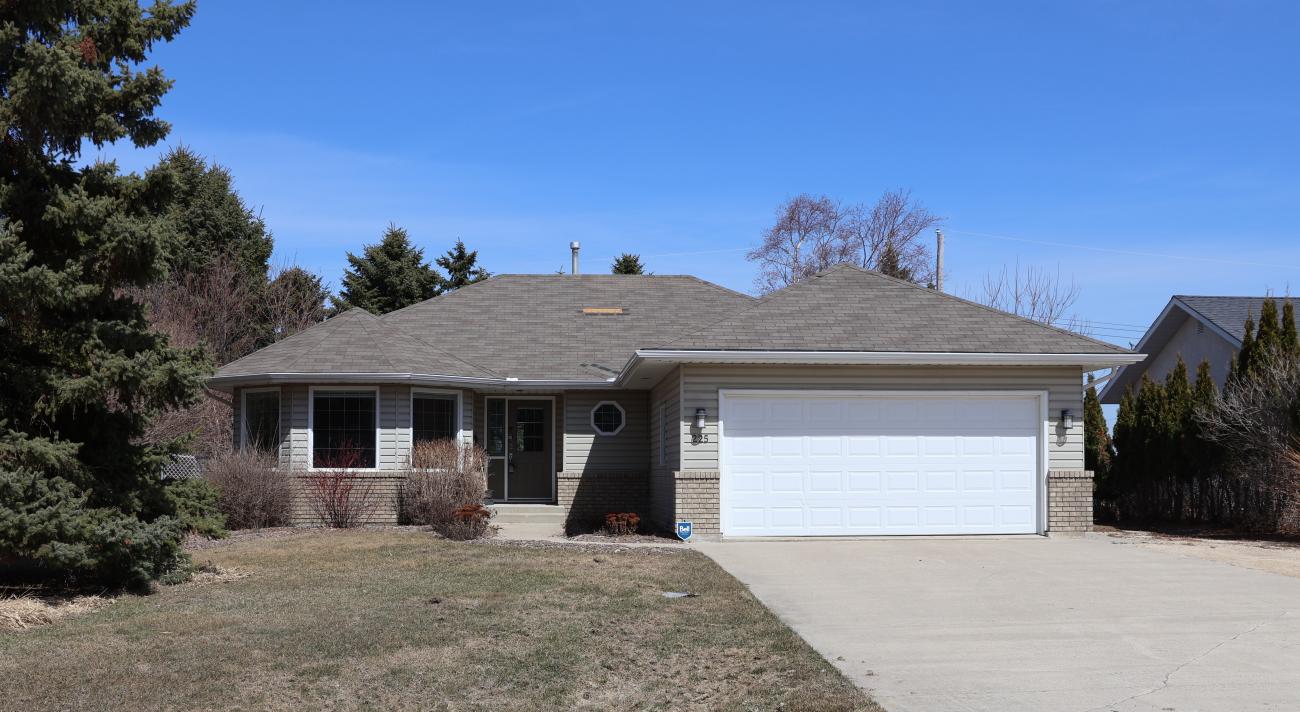
This house on Third Street North in Niverville is primed to become a group home.