

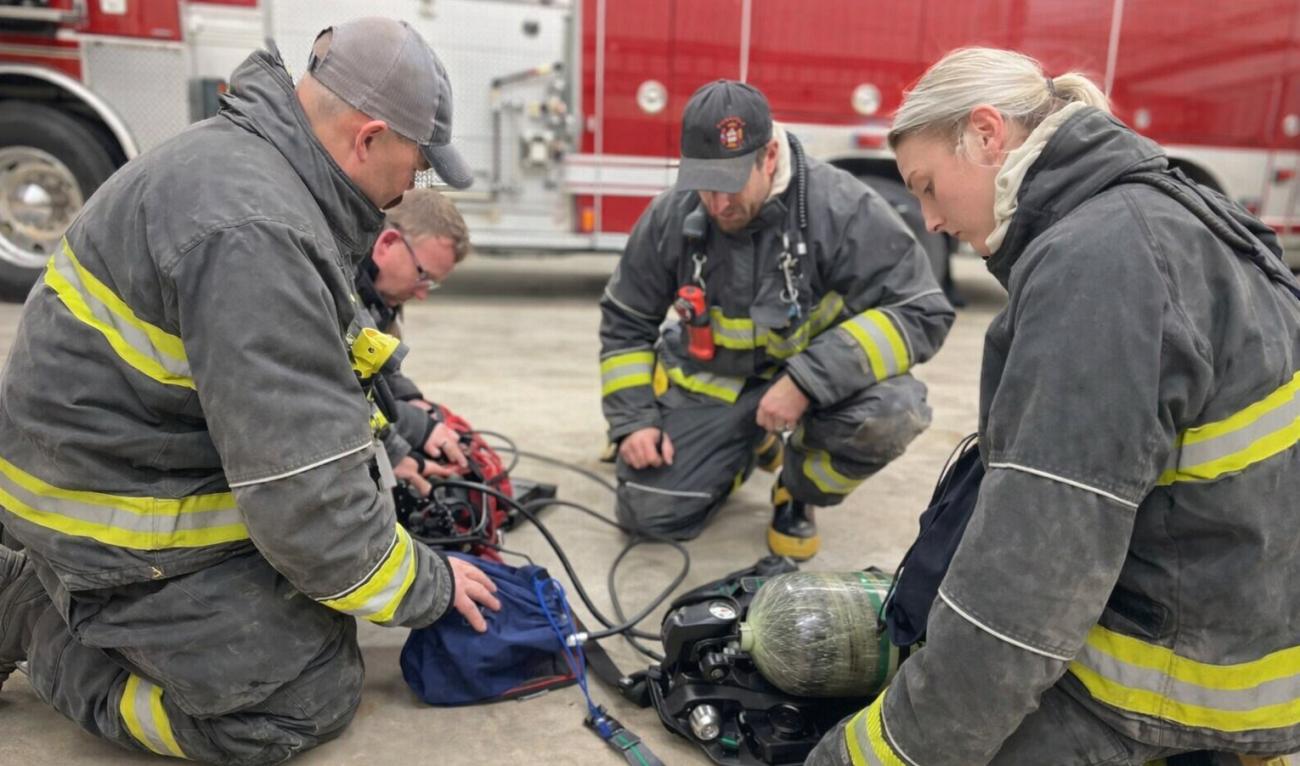
After years of waiting and much advocating, the Niverville Fire and EMS department will be the first in the province registered as Advanced First Aid (AFA) service providers. The program will officially launch on March 1.
For local EMS members, the newly created program will grant them the credentials to act as medical first responders with the completion of a 75-hour training course.
For residents, it means that a much broader cross-section of fire and EMS members can be called upon to respond to medical emergencies.
“Before, there were times that we weren’t able to respond to a call due to not having somebody that was licensed,” says fire chief Keith Bueckert. “Out of the 258 medical calls that we did last year, there were ten calls that we weren’t able to respond to.”
That’s not to suggest that certain Niverville residents experiencing medical distress were left unattended. It simply means that they were required to wait until an ambulance arrived for medical assessment and treatment to begin.
When one of Niverville’s limited number of licensed first responders were available to attend, they could do so in minutes. Under the new AFA certification model, the number of Niverville members now qualified to provide first responder services will rise from 14 members to 30.
Under the new AFA model, members with advanced first aid training can respond to medical emergencies with the stipulation that they communicate, by phone, with the Virtual Emergency Care and Transfer Resource Service (VECTRS) before administering certain medications.
Prior to 2022, EMS services in Manitoba were accountable to Shared Health, the provincial body governing health services. Following the pandemic, the province found themselves in a predicament in terms of paramedic shortages.
Bueckert says that this predicament may have led Shared Health to partner with the College of Paramedics in overseeing EMS going forward.
In 2022, these bodies made changes to the first responder training requirements that added the need for paramedic training to their certification. The change affected both urban and rural EMS departments equally.
“That course, which used to be about 120 hours, jumped up to 350 hours,” Bueckert says. “So our ability to train new staff as first responders basically came to a standstill due to the hours required [to license] just so they could volunteer in their community.”
Because Niverville doesn’t provide ambulance services, the first responder course became prohibitive and didn’t offer any further value to the department or community.
Additionally, the College of Paramedics required rural fire departments to pay an annual fee to belong to the organization, costing local taxpayers while they gained no additional services.
A working group was created which included representation from the Association of Manitoba Municipalities. Their goal was to encourage Shared Health and the College to consider alternatives for rural EMS departments who rely on volunteer labour.
Finally, in 2024, Bueckert says they introduced the much improved 75-hour first responder course. Last January, 14 of Niverville’s 40 fire and EMS staffers took the course and received certification. It took another year for Shared Health to work through the red tape to allow them to use that certification.
“Late last week, we [heard] from the Manitoba Licensing Compliance Branch and they informed us that we have become the first department in the province to be moving ahead with the Advanced Firefighter Aid program,” Bueckert says, relieved. “We’ve had a lot of people throughout the province working extremely hard on this. Hopefully it catches on and we can have more of a voice in the province on directing how this program grows in the years ahead.”
In the meantime, the Niverville Fire and EMS are always looking for more members willing to serve the community.
FOR MORE INFORMATION
To apply, visit: www.whereyoubelong.ca/fire-and-emergency-services