

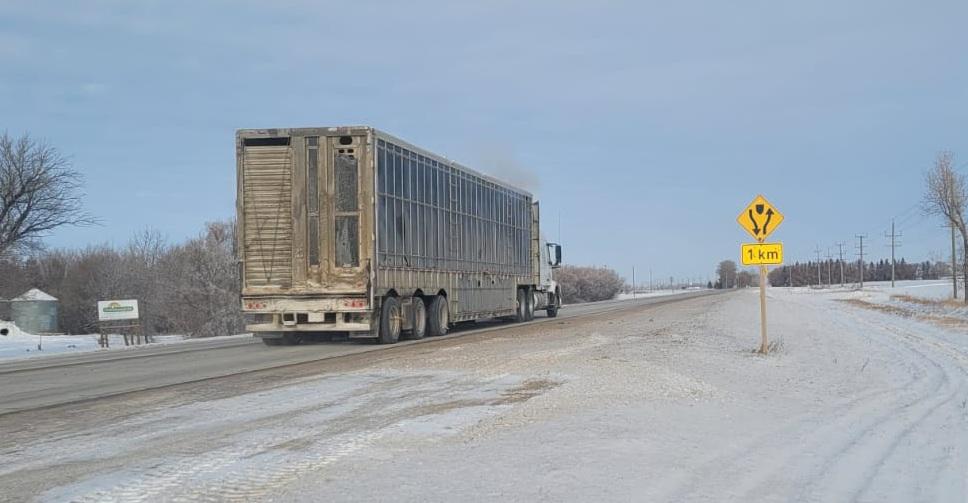
On March 3, Ritchot’s council was given the first opportunity to provide feedback on the future twinning of Highways 59 and 52.
In the coming weeks, representatives from Manitoba Transportation and Infrastructure (MTI) and WSP, the Winnipeg-based design firm contracted to perform the functional design study, will meet with the councils of three other municipalities—Hanover, Tache, and De Salaberry—for a similar purpose.
The design study is anticipated to take approximately two years to complete, from early stakeholder consultation, happening now, to the submission of the final report to the province by the end of 2028.
In total, about 30 kilometres of highway are under consideration for twinning, from Highway 210 to Highway 52, and then a second stretch along the 52 to Mitchell.
Public engagement will continue through the spring of 2026. By the end of this year, WSP expects to have created a number of conceptual highway alternatives.
One year from now, they will be back to collect feedback from stakeholders regarding those alternatives.
After some refinement following feedback, they’ll return for one last stakeholder session to present the preferred design.
“It’s in the early phase of the design process where we identify the road right-of-way and roadway layout based on projected travel patterns and demand,” says Meagan Boles of WSP. “These studies are informed by both technical aspect and public input.”
Affected landowners, business owners, and local interest groups will be among the many stakeholders WSP reaches out to throughout the process. The general public will be invited to open houses during phases two and three.
Some key components informing a design study are property boundaries and land ownership bordering the highway. As well, WSP will analyze collision history, general traffic and school bus patterns, and environmental impacts. The goal is to develop a design based on a 20-year projection of traffic needs.
Other items for consideration are overall cost of the project as well as social and economic impacts, including minimizing the need for land acquisition.
“The detail design portion of the project will be contingent on if there’s any kind of land acquisition needed and how smoothly that goes,” Boles says. “If we end up where we have an issue with purchasing and\or acquiring land, that can delay the process.”
They will do their best to work around existing homes, businesses, and buildings, according to Boles, although that’s not always possible.
When WSP’s job is done, MTI will step in to create a detailed design plan. This process will take anywhere from 12 to 18 months. Only then can construction begin.
In other words, commuters can expect at least another three to four years, or more, before the pylons appear and detour signs go up.